Alexis de Tocqueville already noted this in « De la démocratie en Amérique » (1835): « I am not so much alarmed at the excessive liberty which reigns in that country as at the inadequate securities which one finds there against tyranny. »
So what are the characteristics of the tyranny Tocqueville had in mind speaking about the american political system ? Let’s pay a visit to the ancient philosophers.
According to Plato (Book 9 – The Republic) and his cyclical vision of the world, democracy always ends up perverting into tyranny. The tyrant is a providential man who, after hypnotizing the crowd, claims to rescue people from chaos. But in reality, he buries democracy. For his own benefit. However, tyranny is more than the seizure of power by an individual. The individual tyrant is immoral (1), a liar and demagogue (2), excessive and a victim of his hybris/hubris (3).
The tyrant only seeks his own pleasures (1), the satisfaction of his personal ambition. He doesn’t give a damn to the common good : he dissolves ipso facto the social contract (John Locke) on which civil society is founded. He plunges his country into chaos, a struggle of all against all. He is first and foremost a man incapable of governing himself, because he gives free rein to his desires and his crude pleasures. Tyranny is always manifestly immoral. The tyrant is a seducer and a manipulator. He seduces free beings (Aristotle – Politics) while confiscating the power they had over their destinies. This seduction is a misencounter (Etienne de la Boétie) a « malencontre » in french.
The tyrant has no ideas of his own ; he does not promote an ideology (Hannah Arendt), unlike leaders of a totalitarian system. He mixes truths and lies (2) alternative facts and real facts according to the circumstances. The tyrant is a smooth talker. Already in Plato’s time, tyranny would be unthinkable without the agora. Something that would unite today the stock market and social media. Without the ability to speak at any time from a podium and address the people, there would be no tyrant. In ancient Greece, tyranny is inseparable from the rise of rhetoric in the political sphere.
In tyranny, there is a tendency toward excess (3) that flouts conventions, ordinary decency, and also the common sense of justice. The tyrant creates a rupture, and his reign appears as a state of exception. It profoundly destabilizes society.
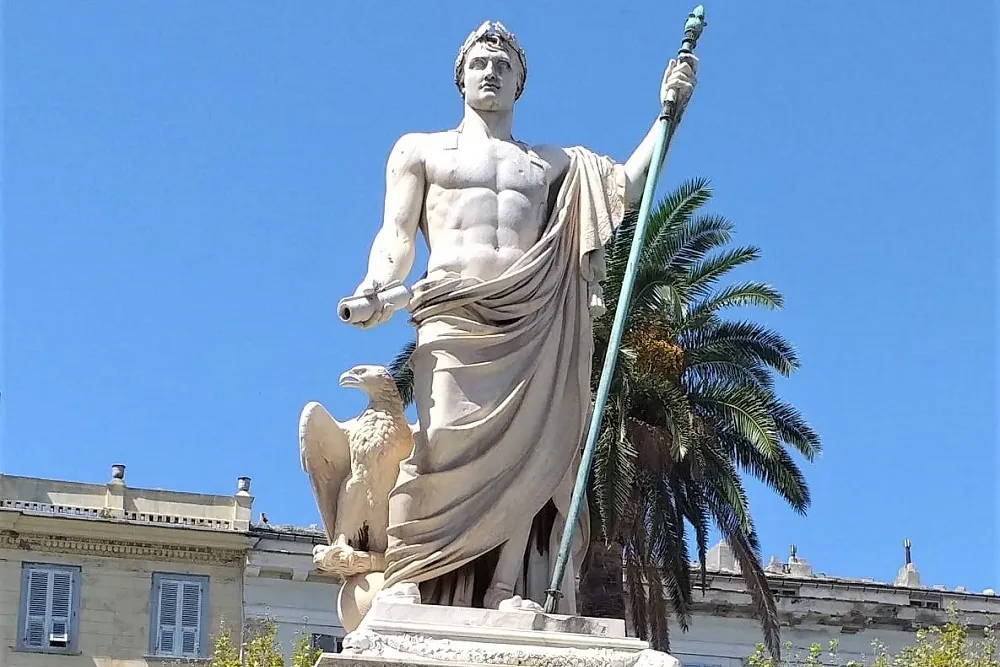
« Caesarism » is a military variant of tyranny : Caesar was the gravedigger of the Roman Republic. But he didn’t have time to benefit from the imperium; he was assassinated by a conjuratio and his assassination triggered the civil war. The Republicans were finally screwed by Augustus, the first emperor and son of Caesar. Napoleon is an example of Caesarism, but not de Gaulle (who agreed to a constitutional order).
—-
John Locke, in the Second Treatise of Civil Government (1689), argues that one has the moral right to oppose a tyrant by force, it’s self defense. By killing him, if necessary.